About the Project
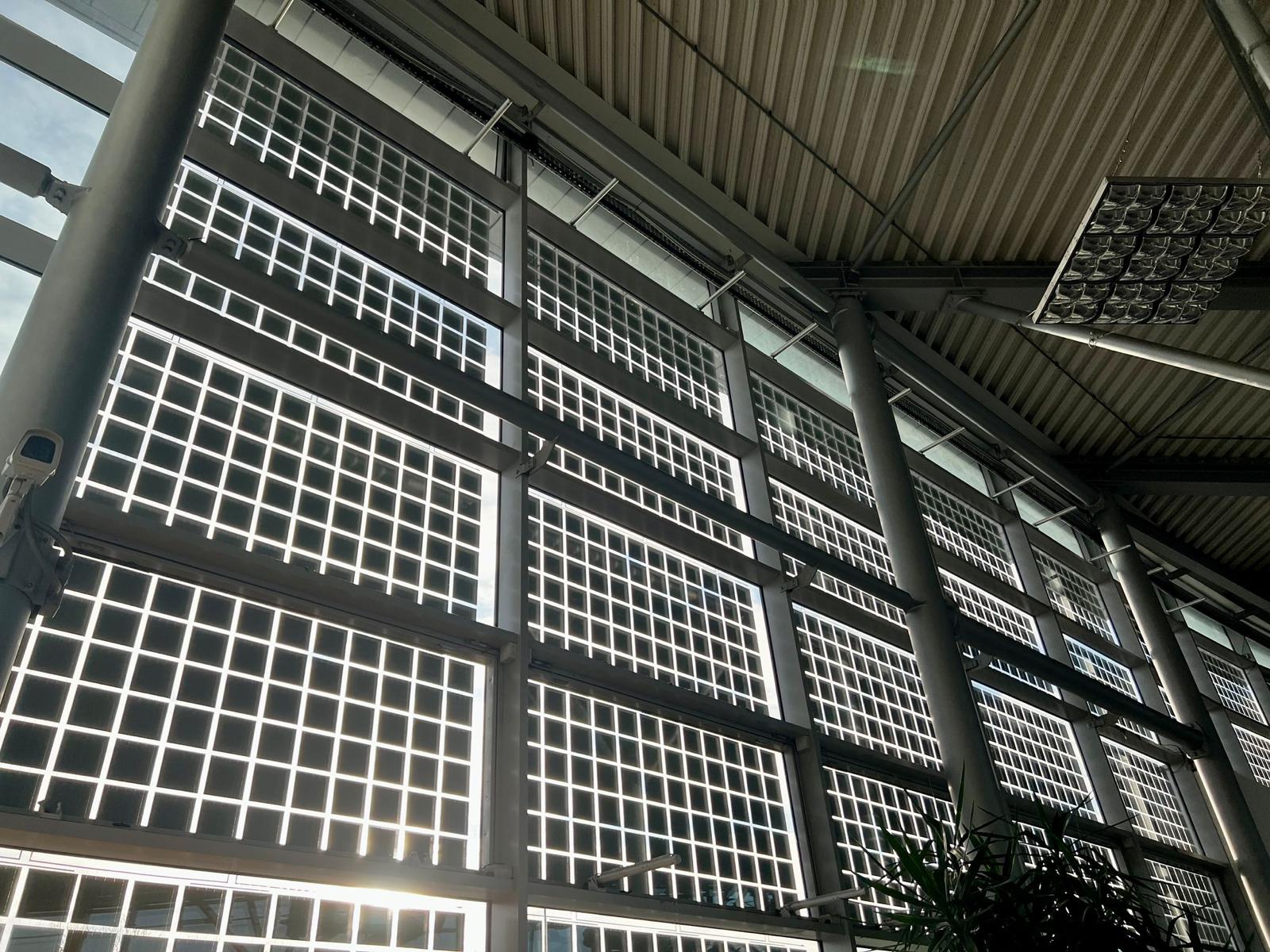
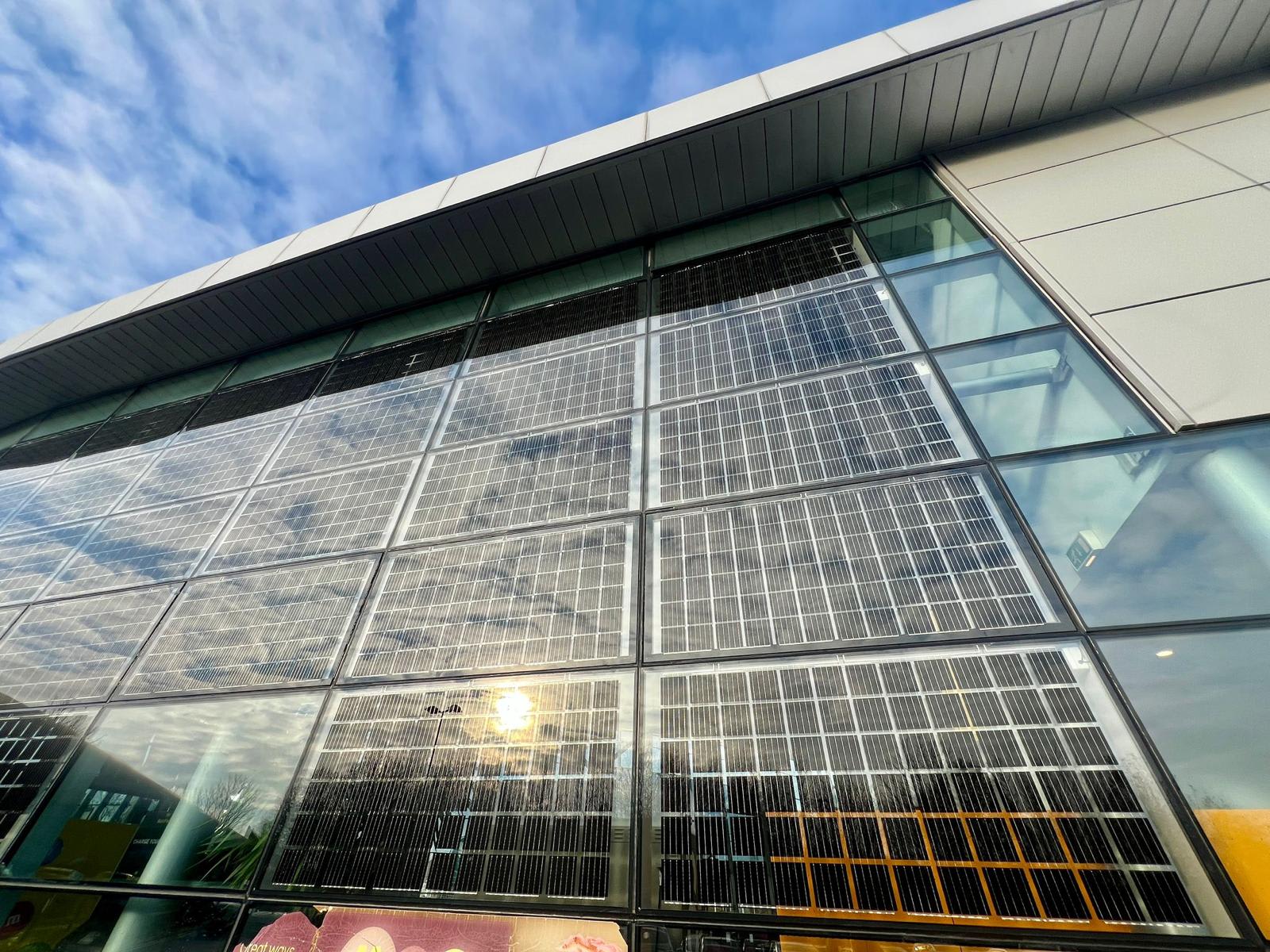
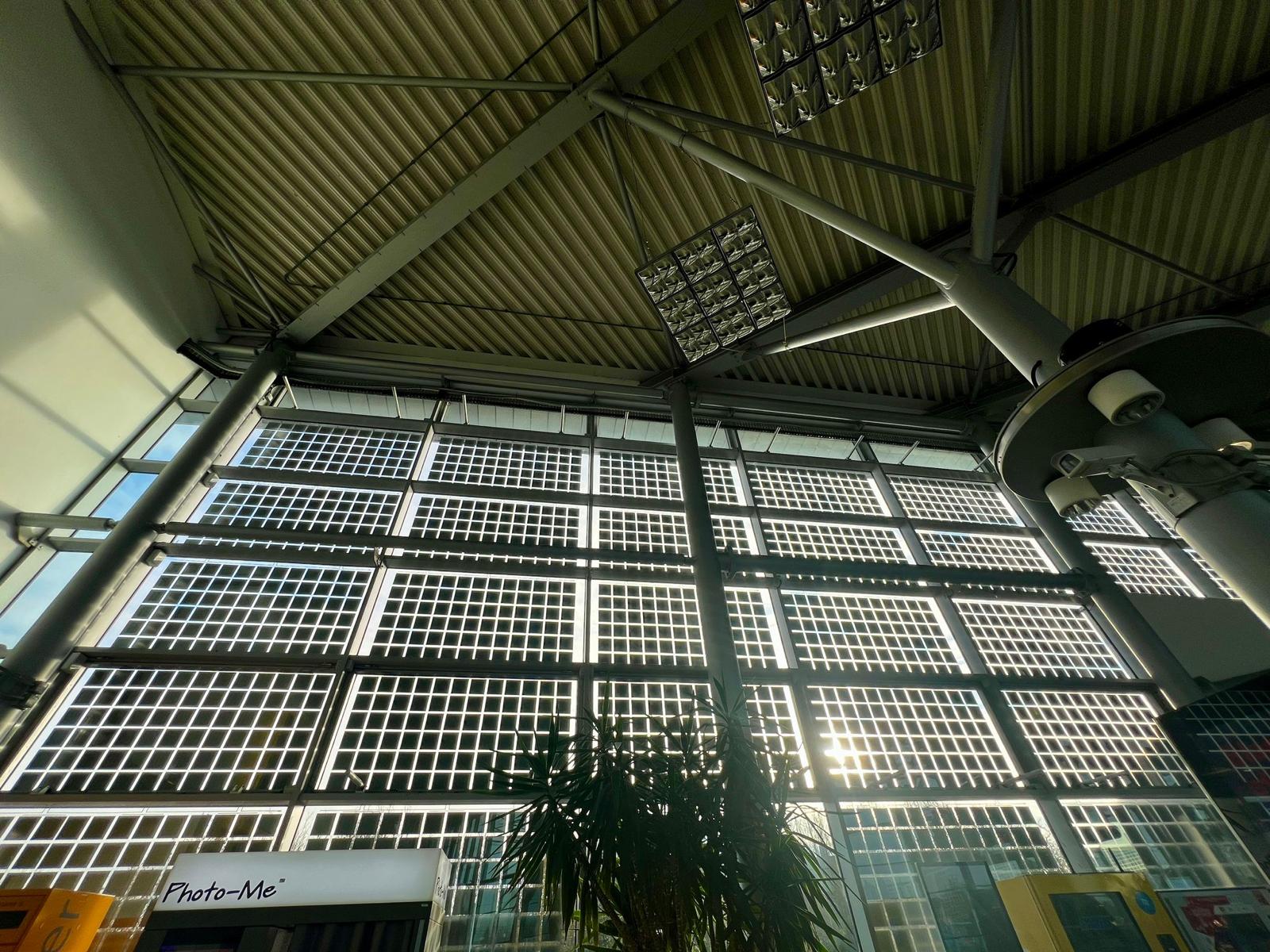
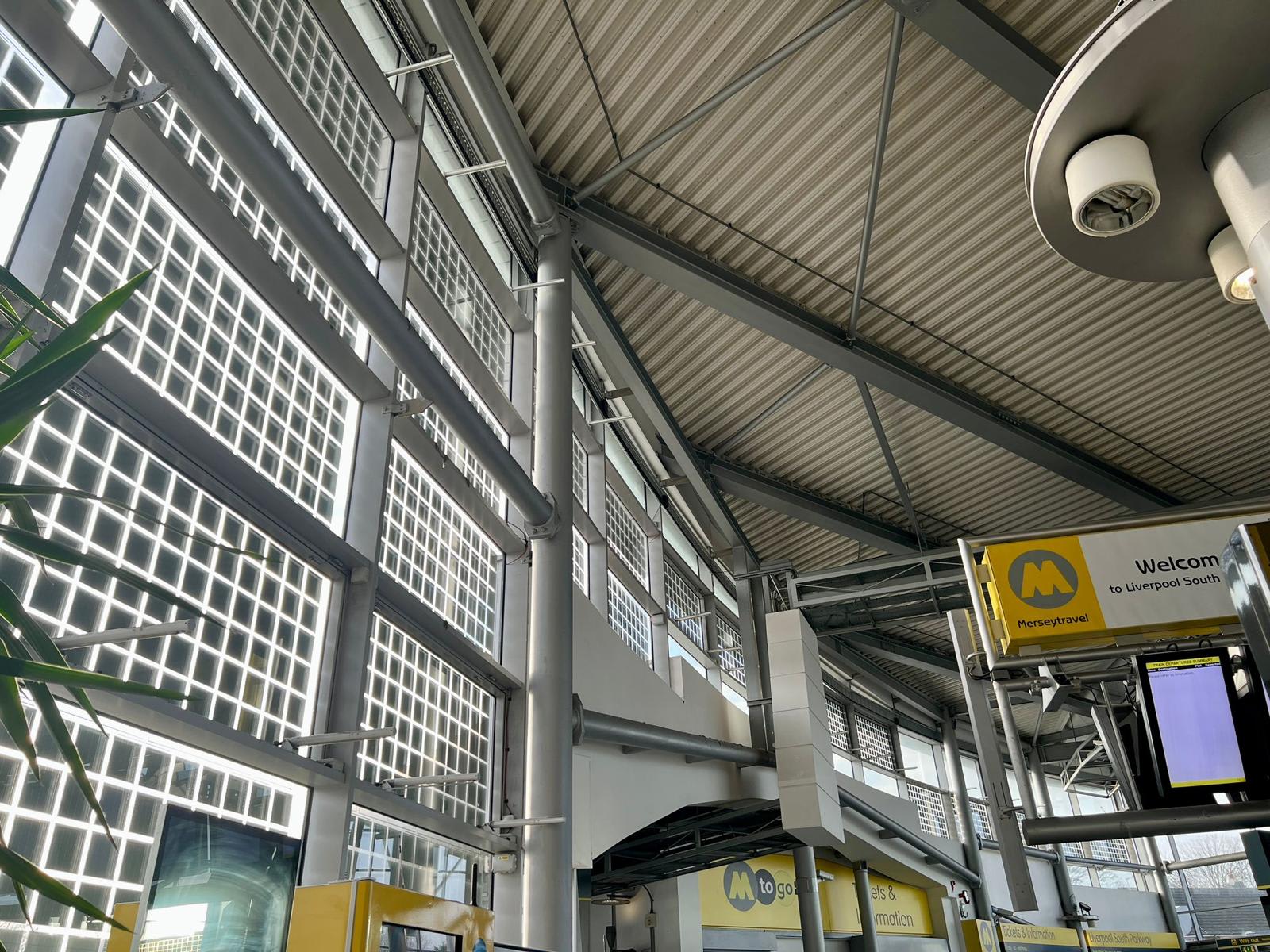
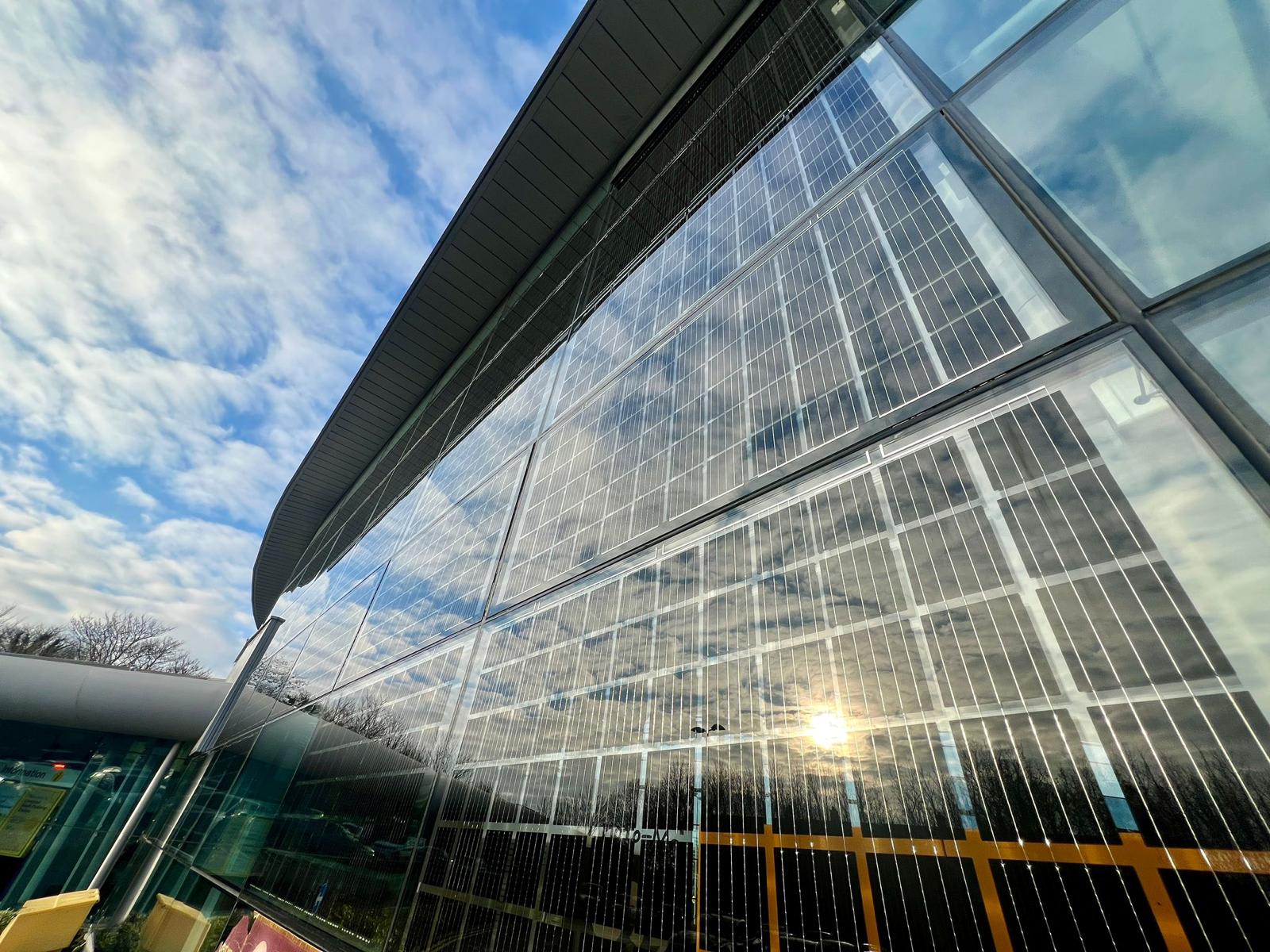
We replaced the ageing solar façade at Liverpool South Parkway station with new building-integrated solar glass, so the station's glass frontage generates useful power once again.
About the Project
Nearly three million people use Liverpool South Parkway each year. The station won Network Rail's annual Environment Award for its sustainable design, which includes solar power, recycled materials and rainwater harvesting.
Its original solar façade used older technology. Over time it developed technical faults and was generating very little power. We were asked to replace it with modern building-integrated photovoltaic (BIPV) glass – solar panels that form part of the building itself – within the existing façade framework.
The Challenge
This was a retrofit, not a new build, which brought its own problems:
- Fitting existing frames Every new panel had to fit the existing façade openings exactly. That meant two panel sizes: 24 fixed panels and 9 opening panels that still had to work as vents.
- A live station The station stayed open throughout. Lifting and glazing work needed careful planning around passengers and staff.
- Hidden wiring All the DC cabling had to run inside the existing frame channels, so nothing would spoil the clean lines of the glass.
- Outdated electrics The old system ran through three small inverters, two of which were showing string faults.
The Solution
We supplied 33 custom-sized PS-MC-ST semi-transparent solar glass panels. The fixed panels measure 2385 mm × 1178 mm and the opening panels 2350 mm × 1148 mm, matching the original layout.
Our glazing partners fitted the glass into the existing framework. The wiring team then ran new DC cabling through the frame channels. We redesigned the electrical layout into two strings and replaced the three old inverters with a single 10 kW three-phase Solis inverter. This makes the system simpler to run and easier to monitor.
The Result
The station now has a fully working 12.375 kWp solar façade (kWp, or kilowatt-peak, is the system's maximum output). The semi-transparent glass still lets daylight through, and the new panels follow the original façade layout – but the façade now generates clean power again.
The project shows that older BIPV façades do not need to be written off. You can upgrade them with modern solar glass while keeping the original design.
Technical Specification
- System size 12.375 kWp
- Panel model PS-MC-ST
- Panel count 33 panels (24 fixed, 9 opening)
- Panel dimensions 2385 mm × 1178 mm (fixed); 2350 mm × 1148 mm (opening)
- Light transparency 30–40%
- Inverter 10 kW three-phase Solis
- Installation type Retrofit solar façade
Project Details
- Sector Rail Infrastructure
- Location Liverpool South Parkway, Liverpool
Installation Partners
- Glazing Glass & General
- Glazing Greenbridge
- Photo Credits Anja Williams
Have an older solar façade that is underperforming? Get in touch to discuss your project: 01223 911534
- Power generated:
- 12.375 kWp